How to Optimize Your Resume for ATS and Pass Automated Screening
A great resume must impress both recruiters and applicant tracking systems. Learn how to use the right keywords, formatting, and achievement-driven content to pass ATS screening and land more interviews.
Adeshina Babatunde
March 20, 2026
If you have ever applied to dozens of jobs and heard nothing back, your resume may be getting filtered out before a human ever sees it. Many employers use applicant tracking systems, or ATS, to organize applications, search for relevant qualifications, and rank candidates against a job description. That means a strong resume today must do two jobs at once: impress recruiters and communicate clearly with software.
The good news is that optimizing your resume for ATS does not require gimmicks or keyword stuffing. It requires clarity, relevance, and a strategy tailored to each role. In this guide, you will learn how ATS screening works, what resume elements matter most, and how to improve your chances of making it to the interview stage.
What an ATS Actually Does
An applicant tracking system is software used by employers to collect, sort, and search job applications. While capabilities vary by platform, most ATS tools help hiring teams manage high application volume by parsing resume content into structured fields and identifying candidates whose experience matches the role.
How ATS screening typically works
When you submit a resume, the system may extract information such as your name, contact details, work history, education, skills, and certifications. Recruiters can then search the database using keywords like job titles, software tools, degrees, or industry terms. In some cases, the ATS may also assign a relevance score based on how closely your resume aligns with the job posting.
It is important to understand that ATS software is not always “rejecting” resumes in a dramatic, all-or-nothing way. Often, it simply makes some resumes easier to find than others. If your resume lacks the right terminology or uses formatting the system cannot parse well, you may become less visible in the candidate pool.
What ATS does not replace
Even in highly automated hiring workflows, human judgment still matters. Recruiters and hiring managers ultimately evaluate whether your experience is credible, relevant, and compelling. That is why ATS optimization should never come at the expense of readability. The best resume is both machine-friendly and persuasive to people.
Start With the Job Description, Not Your Old Resume
One of the biggest resume mistakes is sending the same generic document to every employer. ATS optimization begins with the specific job posting because that is where the target keywords and priorities live.
Identify the core requirements
Read the job description carefully and highlight repeated or emphasized terms. Pay close attention to:
Job title and seniority level
Required hard skills and software tools
Industry-specific terminology
Certifications, licenses, or degrees
Core responsibilities
Preferred qualifications
For example, a marketing role may mention “SEO,” “Google Analytics,” “content strategy,” and “cross-functional collaboration” multiple times. If you have those qualifications, your resume should reflect the same language naturally and accurately.
Match language without copying blindly
You do not need to duplicate the job posting word for word, but you should mirror the employer’s terminology where it truthfully applies. If one company says “customer success” and another says “client retention,” consider using the phrase that appears in each posting if your experience supports it.
This matters because ATS searches are often literal. A resume that says “CRM platforms” may be relevant, but if the employer is specifically searching for “Salesforce,” naming Salesforce directly can improve your visibility.
Create a tailoring checklist
Before you submit any application, compare your resume against the posting and ask:
Does my target title align with the role?
Have I included the most important skills and tools?
Do my bullet points reflect the responsibilities they care about?
Have I used the same terminology where appropriate?
Is every claim accurate and supported by my experience?
This simple review process can significantly improve your odds of passing automated screening.
Use an ATS-Friendly Resume Format
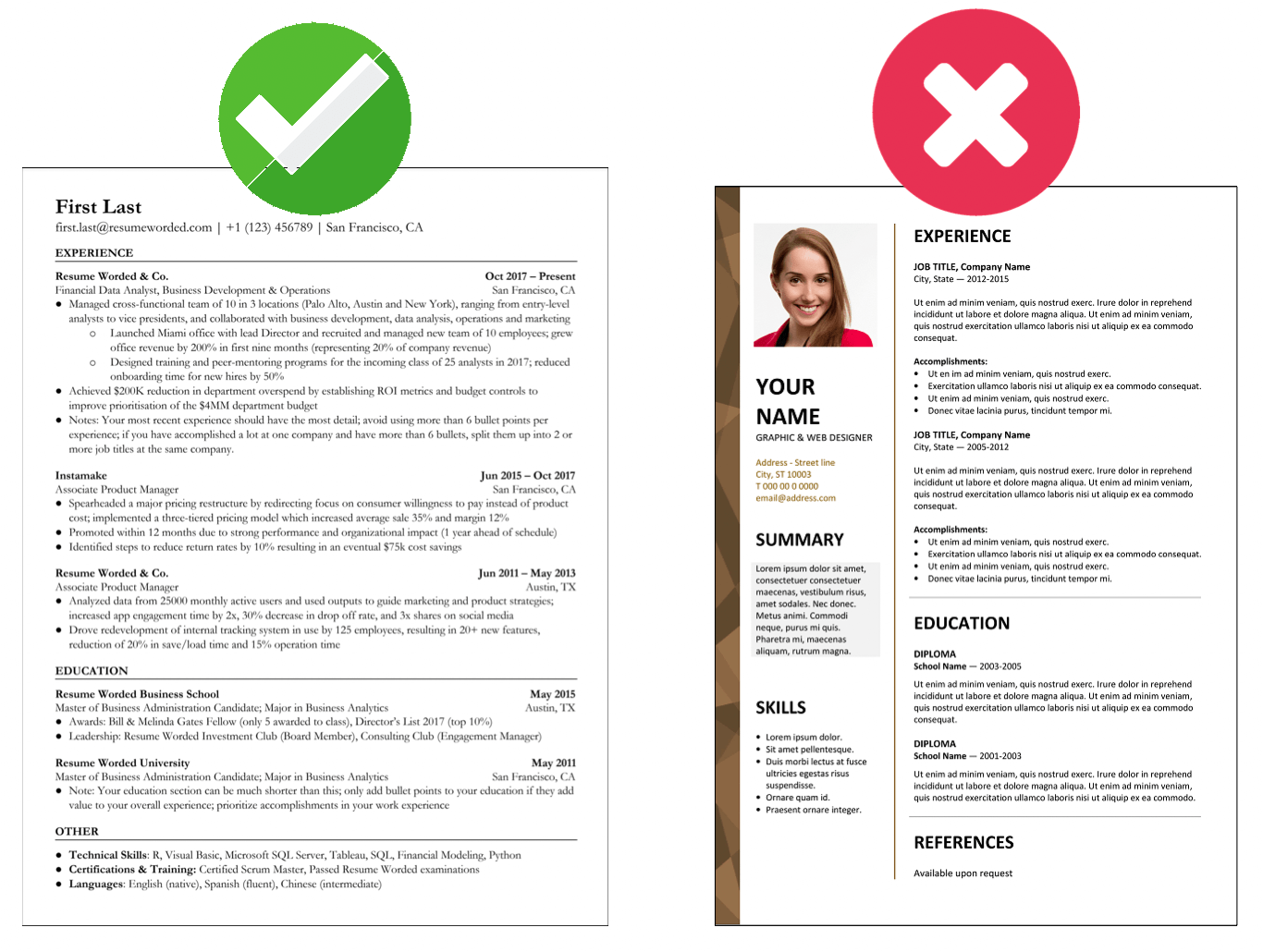
Formatting matters more than many job seekers realize. A visually creative resume may look impressive, but if the ATS cannot read it correctly, key information can be lost or misfiled.
Choose a simple, standard layout
The safest approach is a clean reverse-chronological resume with clearly labeled sections. Use standard headings such as:
Summary
Work Experience
Education
Skills
Certifications
Avoid unusual section titles like “Where I Have Made an Impact” or “My Journey” if they make it harder for the system to identify your content.
Formatting choices to avoid
Many ATS platforms have improved, but some still struggle with complex design elements. To reduce parsing issues, avoid:
Tables and text boxes
Graphics, icons, and charts
Headers and footers for essential information
Multiple columns
Images or logos
Overly decorative fonts
Keep your contact information in the main body of the document, not in a header. Use a standard font and consistent spacing. Save the file in the format requested by the employer, usually PDF or DOCX. If no format is specified, DOCX is often a safe choice, though many modern systems also parse PDFs well.
Make every section easy to scan
Recruiters spend only seconds on an initial review. Use concise bullet points, strong action verbs, and clear dates. A resume that is easy for software to parse is usually also easier for people to read.
Optimize Keywords the Right Way
Keywords are central to ATS performance, but there is a right way and a wrong way to use them. The goal is relevance, not repetition.
Where to place important keywords
Include high-value keywords in the sections where they fit naturally:
Headline or summary: your target role, years of experience, and top specialties
Skills section: software, technical skills, methodologies, and languages
Work experience: responsibilities and achievements tied to the role
Education and certifications: degrees, licenses, and formal training
For instance, if a project manager role emphasizes Agile, stakeholder management, Jira, budgeting, and risk mitigation, those terms should appear in your resume if they are part of your background.
Use both acronyms and full terms
Different recruiters search differently. To improve coverage, include both the acronym and the spelled-out version when relevant. Examples include:
Search engine optimization (SEO)
Customer relationship management (CRM)
Master of Business Administration (MBA)
Project Management Professional (PMP)
This can help your resume appear in more searches without sounding unnatural.
Avoid keyword stuffing
Repeating the same terms excessively can make your resume sound robotic and may raise red flags with recruiters. Instead, integrate keywords into meaningful statements. Compare these two examples:
Weak: Managed projects, project management, Agile projects, project planning, project delivery.
Better: Led 12 cross-functional Agile projects from planning through delivery, improving on-time completion by 18%.
The second version includes relevant keywords while also proving impact.
Write Experience Bullets That Rank and Persuade
ATS optimization gets you found, but strong content gets you shortlisted. Your work experience should show not just what you did, but how well you did it.
Focus on achievements, not task lists
Many resumes read like job descriptions. That is a missed opportunity. Employers want evidence of results. Whenever possible, use metrics, scope, and outcomes.
Instead of writing:
Responsible for managing social media accounts.
Write:
Managed social media strategy across LinkedIn, Instagram, and X, increasing engagement by 34% in six months.
This approach helps with ATS because it includes relevant terms, and it helps with recruiters because it demonstrates value.
Use a simple formula
A reliable structure for bullet points is:
Action verb + task + context + measurable result
Examples:
Implemented Salesforce workflows for a 15-person sales team, reducing lead response time by 22%.
Analyzed monthly financial reports and identified cost-saving opportunities that lowered operating expenses by $85,000 annually.
Coordinated onboarding for 40+ new hires per quarter, improving completion rates for required training to 98%.
Include role-specific terms in context
If the job calls for “data analysis,” “forecasting,” or “vendor management,” incorporate those terms into your bullet points where they genuinely apply. Context matters. A keyword embedded in a concrete accomplishment is more credible than a keyword listed in isolation.
Common ATS Resume Mistakes to Avoid
Even qualified candidates can get overlooked because of avoidable errors. Here are some of the most common problems.
Using the wrong job title
If your current title is highly internal or unusual, consider adding a more recognizable equivalent when appropriate. For example, “Client Happiness Lead” may be better understood as “Customer Success Manager” if that reflects the actual work you performed.
Leaving out critical skills
Some candidates assume recruiters will infer skills from their experience. Do not rely on that. If you use Excel, SQL, HubSpot, Adobe Creative Suite, or another relevant tool, name it directly.
Submitting a one-size-fits-all resume
A generic resume may be good enough for none of the roles you want. Tailoring does not mean rewriting from scratch every time, but it does mean adjusting your summary, skills, and top bullet points to fit the position.
Overdesigning the document
Stylish templates can create parsing issues and distract from substance. In most industries, clarity beats creativity. If you work in a design field, consider using a simple ATS-friendly resume for applications and a portfolio for visual work.
Ignoring spelling and consistency
Misspelled keywords can hurt searchability. Inconsistent date formats, unclear job titles, and vague descriptions can also make your resume harder to process. Proofread carefully and keep formatting uniform.
How to Test and Improve Your Resume Before You Apply
You do not have to guess whether your resume is ATS-friendly. You can review it systematically before submitting applications.
Run a manual keyword comparison
Copy the job description into a separate document and compare it with your resume. Look for the most important nouns, skills, and qualifications. If several high-priority terms are missing and you genuinely have that experience, revise accordingly.
Check parsing readability
Save your resume as plain text and read through it. If the order of information becomes confusing or section content appears scrambled, the ATS may struggle too. This is a quick way to spot formatting problems.
Ask whether a recruiter could skim it in 10 seconds
Your resume should answer these questions almost immediately:
What role are you targeting?
What are your strongest relevant skills?
Where have you worked?
What results have you delivered?
If those answers are not obvious, simplify your structure and sharpen your summary.
Keep a master resume and tailored versions
A practical workflow is to maintain one comprehensive master resume with all your experience, metrics, and keywords. Then create tailored versions for each application by selecting the most relevant content. This saves time while allowing customization.
Final Thoughts: Optimize for Software, Write for Humans
Passing ATS screening is not about tricking a system. It is about presenting your qualifications in a way that is easy to parse, easy to find, and easy to trust. A strong ATS-friendly resume uses the right keywords, a clean format, and achievement-focused content aligned with the job description.
If you remember only one thing, let it be this: relevance wins. The more clearly your resume shows that you match the employer’s needs, the better your chances of moving forward.
Before your next application, take 15 extra minutes to tailor your resume, simplify the formatting, and strengthen your bullet points with measurable results. That small investment can make the difference between being filtered out and getting the interview.
If you are updating your resume now, start with one target job posting and apply the steps from this guide section by section. Your resume does not need to be flashy. It needs to be findable, readable, and convincing.
You might also enjoy

Can One Resume Work for Multiple Industries? What You Need to Know
9 min read

How to Explain Employment Gaps on Your Resume Without Hurting Your Chances
9 min read
Should You Include a Photo on Your CV? Pros and Cons Explained
10 min read

How to Successfully Switch Careers Into a New Industry
10 min read
Comments
No comments yet. Be the first to share your thoughts!
Leave a comment